
 By Admin
Travel has now transcended geography and entered into the emotions sphere in 2026. People are no longer just visiting popular destinations or those that are trending on social media. They are instead traveling on the basis of how they wish to feel, it is either peace, excitement, belonging or self discovery. This metamorphosis is an indication of a more profound sea change in human value systems, where experiences come to be valued more than checklists and memories are valued more than photographs.
In the current case, modern-day travelers are becoming more conscious of the idea that a destination is not the only thing that will guarantee them satisfaction. The feeling that is generated in a journey is what really makes a journey. That is why cultural travelling that provides authenticity and connection with people is taking centre stage in this new travelling mentality.
The Destination to Emotion Shift.
People are making decisions to travel based on emotion and not physical location. Individuals desire to get rid of stress, reconnect with them, or establish healthy relationships. This has restructured the way the trips are envisioned and implemented with emotional results being the core aim, rather than sightseeing.
The motivation behind travelling.
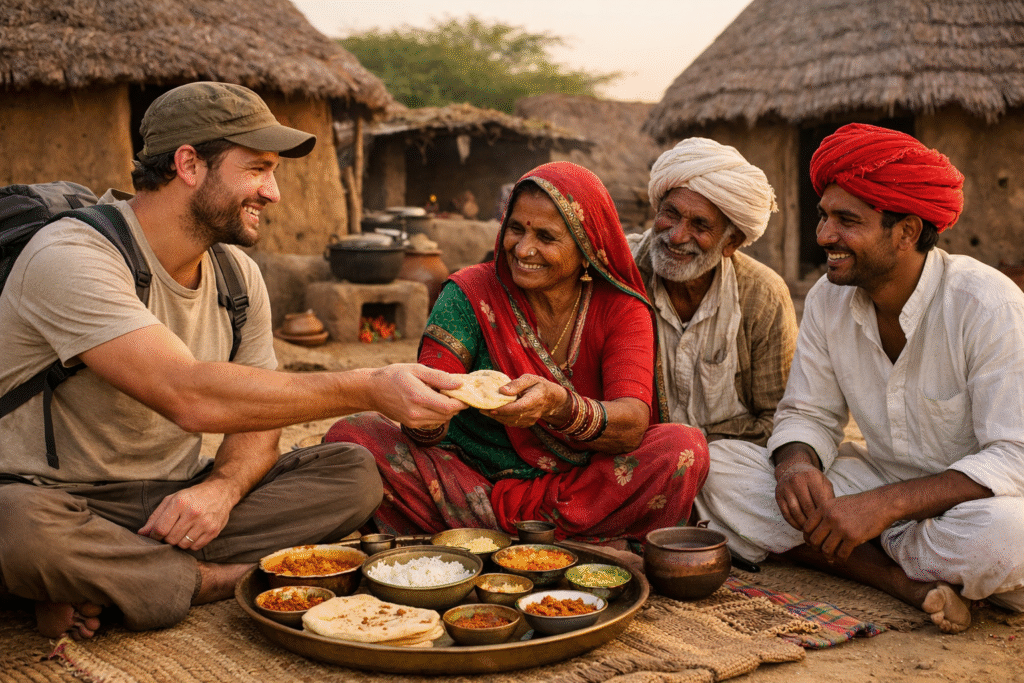
Customers are now making a conscious decision of what they would like to experience before they make a decision on where to go. A person who wants to relax could go to a small rural village, and one who wants excitement can go to a cultural festival. This emotional clarity assists to generate more rewarding and personalized travel experiences, making sure that each of the journeys has a deeper meaning than leisure.
Travel and Mental Wellness.
The psychological aspect of health has gained a big influence in the choice of the traveller. Travel is also a means through which many people are able to get out of day to day stress and get back to themselves. Ventures such as meditation retreats, immersion in nature and spiritual expeditions provide emotional healing and clarity of mind. These types of travels offer a feeling of rejuvenation which is lacking in normal forms of tourism.
The Emergence of Cultural Immersions.
Melting into a culture has become the basis of emotion travel. Travelers do not want to remain outsiders, instead, they would like to be involved in the life of locals. This has seen genuine cultural experiences being more appreciated than the luxurious accommodations or commercial attractions.
Real Experience rather than Fancy.
Travelers are also redefining luxury through focus on authenticity and not comfort. Staying with local families, having home-cooked food and being a part of their daily routine make people feel like they belong to them and nothing can be done to make this experience in a luxury hotel. Through these experiences, the travelers can create long lasting emotional attachments which continue even after the experience is over.
Storytelling Through Experiences
All journeys have become a subjective narrative that is influenced by feelings. Travelers pay attention to those moments when there is a significant experience that can be remembered, e.g., meaningful conversations, cultural rituals, or unexpected discoveries. Telling such stories is not only used to portray destinations, but also to convey the emotions that they cause in people and encourage others to experience similar emotional experiences.
New Trends in Travel of the Heart.
- Slow tourism with the possibility to dive deeper into cultural aspects and become more emotionally attached.
- Traveling alone promotes self discovery, independence and personal development.
- Itineraries based on activities and not landmarks (experience based).
- Wellness tourism with a focus on mental health, relaxation and healing.
- Sightseeing with local cultures and interactions in local communities.
This will affect the Travel Industry.
- Emotion based customized travel packages offered by travel companies.
- Growth of demand for cultural immersion programs and local experiences.
- Expansion of community-based tourism and homestays.
- Change towards experience-based storytelling, not luxury-driven marketing.
- Greater assistance to local economies by direct involvement of travelers.
Difficulties of Travel on Emotion.
Over-Commercialization of Culture
With the increase in the popularity of cultural experiences, the possibility of commercialization of cultural experiences is on the rise. Authenticity can be compromised by changing or acting on some of the traditions to suit the expectations of tourists. It is important to have a balance between accessibility and preservation to safeguard cultural integrity.
Emotions Expectancy vs Reality
Travel that is motivated by emotions normally carries with it high expectations. Tourists can fantasize about some transformational experiences, yet the reality can not necessarily be the same. This disparity may result in disappointment in case the journey is not capable of producing the expected emotional effect.
Sustainability and responsible Travel.
As more people become interested in remote and culturally rich locations, sustainability is becoming an issue. Excessive tourism may have a negative impact on the environment and locals. In order to have long-term benefits, responsible traveling practices need to be put in place, e.g. respecting the local traditions and reducing negative effects on the environment.
Conclusion
Cultural travel is being redefined by emotion-driven cultural travel that aims at defining the purpose of travel in 2026. It puts the emphasis on emotions, experiences, and experiences as opposed to visiting places, as opposed to sightseeing, and as opposed to consumption as opposed to connection. Tourists are now demanding to go on a trip that will add value to the inner world and not just their photograph collections.
With this trend ever-increasing, it will transform the travel industry to embrace more authentic, sustainable and emotionally satisfying travel experiences. In the end, travelling is no longer an act of escaping but getting to know more about it, to associate with it and relate to it as human beings.
FAQs
1. What is cultural travelling with emotions?
Emotional cultural travelling is concerned with experiences that will trigger certain feelings as opposed to visiting certain sites.
2. What is the reason why this trend increases in 2026?
It is motivated by mental health consciousness, online burnout and the need to have human interactions that matter.
3. What is its difference with conventional travel?
Traditional travel is based on sightseeing whilst emotional travel is based on experience and emotional satisfaction.
4. What do you think are instances of emotional travel experiences?
This may be in the form of meditation retreats, cultural festivals, homestays and learning local crafts.
5. Is travel motivated by feelings costly?
Not necessarily. Numerous authentic and emotional experiences, such as village stays or local experiences, are not expensive.