
 By Admin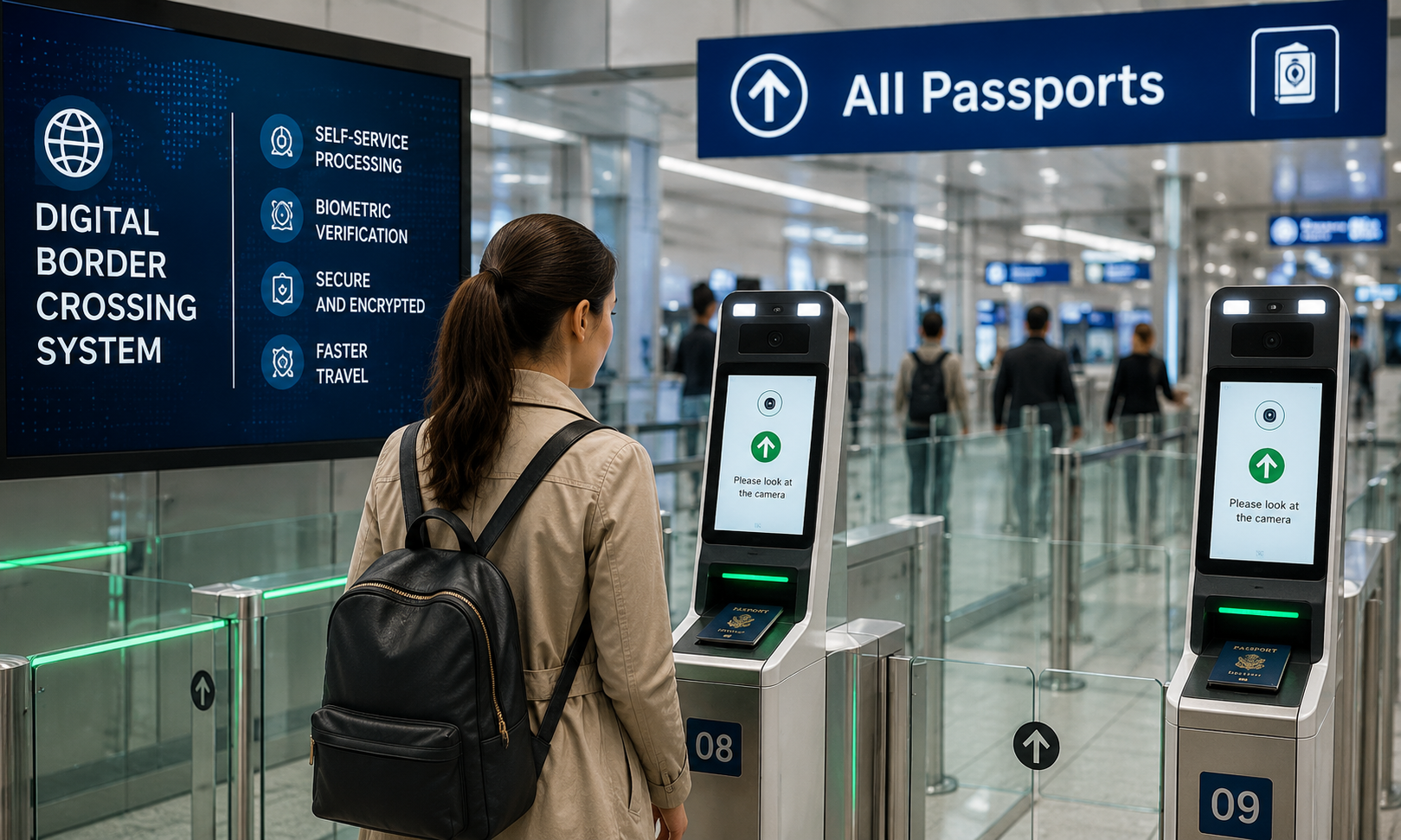
The way people travel around the world is quickly transforming as various governments, airport locations and airline providers implement digital identity technologies. Over the past few decades, the traditional passport has been the irreplaceable travel document,but biometric travel systems are changing the ways cities and states readily use to travel across borders. Combined with other biometric technologies, facial recognition cannot be more rapidly and securely verified than ever before. Countries can use facial recognition in conjunction with fingerprint and other biometric technologies to verify identities in a faster and safer manner than ever before. With an increasing number of people traveling internationally, digital border crossings are playing a role in streamlining and making traveling between countries easier, more efficient and more secure.
What Is Biometric Travel?
Biometric travel is any situation where the government uses unique physical features like those of a person’s face, fingerprint or iris pattern to check their identity in travel. As an alternative to the traditional methods of using boarding passes and passports, virtually secure biometric systems can recall the identity of those traveling through connections to government and airline databases.
Such systems are able to compare the biometric scan with stored identity data to ascertain the identity of the traveller they are scanning. Once verified, passengers are able to pass through the checkpoints, the travel process will be faster and smoother as there are fewer manual checks of documents.
Key Benefits of Biometric Travel
Faster airport processing and shorter waiting times.
Better identification and Border security.
Less need for paper travelling documents.
Smoother boarding and alighting of the bus in peak times.
Better hassle-free travel adventures coupled with contactless.
Why Countries Are Adopting Digital Border Systems
With the rise in the number of travelers, immigration agencies have been faced with a dilemma and airport operators have been burdened. The traditional approaches of verifying documents require a tremendous amount of manpower and at busy traveller traffic centers can be a source of congestion.
Biometric systems are effective as they are able to automate the process of identity verification, all while still being secure. Governments, governments and regional organisations alike are seeing digital technologies on the borders as an opportunity to bring modern technology and transform border management for future travel needs. Such systems also can boost authorities’ ability to combat identity fraud and enhance customer travelers’ experience.
How Biometric Travel Works
Digital Identity Enrollment
The general etiquette of the biometric travel process on the whole started prior to the departures. Depending on the program or airline’s system, travelers can register with the Government-approved program or airline systems dedicated to safely capturing travellers’ facial images or fingerprints. This information is associated with official traveller’s records and kept in safe data-bases. By enrolling, it will speed up the process of checking the passengers’ IDs at the airport and border checkpoint.
Airport Verification Process
At the airport, the customer’s live-time image/scanning is taken by a camera or biometric scanner. This information is instantly and automatically compared to pre-registered ID information. The automated verification can take place at various points in the process, such as at the baggage check-in, security checkpoint, boarding gate and immigration desks – facilitating an increase in speed and decrease in manual document checks.
Identity Matching Technology
One of the main roles of AI and machine learning in biometric travel systems is their ability to provide smart data access control and security.Providing smart data access control and security is one of the crucial technologies in which AI and machine learning algorithms play a vital role in biometric travel systems. They utilize special technologies that use recognisable facial features, fingerprint prints or the iris to make for an accurate identification. The verification usually takes a few seconds, and is a good compromise between security and speed of travelers through checkpoints.
The airports that are leading the biometric travel revolution.
New Technology that enables facial recognition boarding gates.
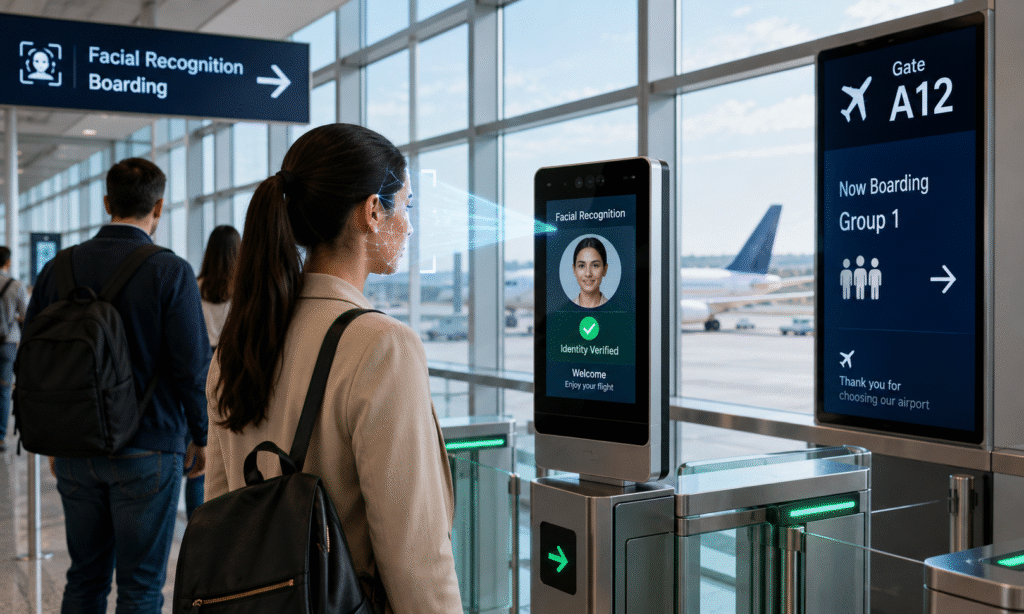
Facial recognition systems are now being installed at many of the world’s airports when it comes to the boarding gates. To avoid displaying a boarding pass and passport several times, people will just have to check a camera. In doing so, these times can be shortened for the airlines, while operation is rendered more efficient.
Automated Immigration Gates
Biometric scanners are being introduced a lot increasingly at border control checkpoints to make use of automated e-gates. These systems can be used for immigration formalities without needing the presence of immigration officers and helps reduce queues and ensure that immigration officers can attend to more complicated immigration matters that require manual processes.
Contactless Travel Experiences
This demand for “no touch” or “touch less” technologies rapidly increased during recent years. Biometric systems help to achieve a touchless trip, minimising the handling of documents and face to face contacts. This convenience has given rise to an appealing use of biometric travel – by those travelling and the airport operators themselves.
Smart Airport Integration
The current trend is transforming the integration of biometric systems with a comprehensive smart airport project, with leading airports doing so. They involve a range of systems that are integrated with check-in, baggage handling, security screening, and boarding – all in one digital experience. This integration is beneficial for the efficiency and is entertaining passengers to smoothen their travelling experiences.
The Future of Passport-Free Travel.
Biometric technology is poised to play an even more significant role in the future of international travel in the next decade, experts believe. India is in the process of testing digital travel credentials that will help see fewer people opting for physical passports. These innovations could make AI-enabled verification of travelers by biometric credentials (facial and fingerprint recognition, for instance) possible, alongside advances in secure digital identity platform communications.
While this probably won’t be the end of the traditional passport in the near future, it is expected for the biometric system to become more advanced worldwide and take up more space in the future. With travel points set to take the future airlines are going to faster, safer and smoother border crossing facilitated by digital identity technologies.
Conclusion
From enabling unattended passports in systems to creating more secure user authentication methods, biometric travel is driving the future of international travel.Biopassports, unattended passports, more secure user identification – these are just a few examples of how biometric travel will shape the future of international mobility. Biometric technologies enable government and airports to deal with the masses of passengers, improve security level and handle the increase in number.Face recognition boarding gates, automated immigration checkpoints, user applications, etc., are just a few of the ways that biometric technologies help government and airports deal with the masses of passengers and to enhance their security, while handling the growth of number. While privacy and data protection will continue to be key areas of interest, further innovation and responsible application are likely to further ramp up the path towards digital border crossings. In an increasingly interconnected world, with technology playing a prominent role in transportation, biometric identities are poised to be a crucial part in making travel people more seamless, efficient and secure across the globe.
Frequently Asked Questions (FAQs)
1. What is biometric travel?
Biometric travel allows the recognition of a traveller’s identity at airport and at border via physical characteristics like a facial image, a fingerprint, or an iris scan.
2. What is the likelihood that biometric systems could be used in place of passports altogether?
Currently, most countries have joined biometric systems together with passports, but future development could decrease the reliance on the travel document and will lead to a shift to biometric solutions only.
3. Are biometric travel secure?
Biometric verification systems typically offer greater accuracy when identifying an individual than other systems, and do need strong cyber security measures.
4. Which biometric technology is most commonly used at airports?
Currently, the most prevalent biometric technology is facial recognition which is easily implemented and quick.