
 By Admin
In the year 2026, the travel industry is evolving rapidly stemming from the use of artificial intelligence (AI) in the processes used to plan, book and experience a trip. Travelers can now use the more sophisticated AI-powered travel platforms to develop personalized travel itineraries, instantaneously compare travel prices, uncover hidden locations and get current travel aid. It is very attractive to STLs, also referred to as Gen Z travellers, the group that is very tech-savvy, prefers fast and customised experience while traveling.
The tourism industry, from travel companies, airlines to hotels, have been investing heavily in the implementation of AI-powered systems, aimed at enhancing customer experience and bookings. The era of travel is increasingly getting increasingly automated, flexible and personalised; making smart itinerary planning a possibility and AI travel assistants a reality.
AI Travel Planning is gaining traction across the globe because of its many benefits.
With people feeling the need for convenience, quickness and personalised recommendations when planning their travels, AI travel planning is one of the hottest travel topics of 2026. This eliminates the time-honored travel research and booking process of hours, with now being able to create complete travel plans in minutes.
A lot of travel applications have been equipped with AI that understands the demands of tourist’s spending budget, their weather passions, extreme journeys, luxury travel options, and deliciousness passions to name just a few. They interpret vast amounts of travel information and make recommendations for the optimal route used, hotel, restaurants and attractions.
Gen Z Travelers Love Smart Travel Experiences
This is being fuelled by the mobile first and convenience orientated travel preference of “Gen Z” travellers. Contrary to the views of the past, most young travellers these days rely on social media and artificial intelligence travel intelligent assistants for introduction to travel destinations rather than conventional travel agencies.Then as now, these younger consumers are finding their travel destinations through social media and the influence of an AI travel intelligent assistant, as opposed to traditional travel agencies.
AI systems can additionally support travellers uncovering the places they may not have gotten to but have an interest in. The website covers basic/income-class tourists to suggest decent locations in the budget while double clicking its mouse, they can also suggest for luxurious tourists.
AI technology Investments in Travel Companies.
Widely used travel sites are now incorporating AI features to enhance user interaction as well as booking procedures.The travel agencies are using the AI resources to make the booking process easier and improve customers’ engagement. Today, the airlines are rolling out AI chat assisted flight details, visa information, baggage information and much more. AI is being implemented in the hotel industry to suggest other things a hotel can provide for the guests, like upgrading the room.
Trend analysis is also being used by travel brands to gain insights into customer behavior and the coming trends in the field of travel. This helps the companies redirect their marketing campaign to thrive and boost their customers’ loyalty.
Enhanced User Experience and Personalization
The possibilities of AI in travel tech for both the travellers and the tourism industry are aplenty. This saves on planning stress, and makes travelling more efficient.
Faster Travel Research and Booking
With the help of the web, now travelers can make a comparison of flights, hotels, transportation and packages of travel in just seconds. The best solutions are automatically removed and filtered for the user by AI systems based on the user’s needs and budget.
Real Time Travel Assistive technology.
Travel assisting tools powered by Artificial Intelligence give real-time assistance in travel. Wearable application providers are announcing enhancements to their mobile apps for travelers that will give them live weather warnings, air traffic control updates, suggestions for restaurants and navigation assistance.
Personalized Recommendations
The customization of the travel planning is one of the best benefits of AI travel planning. The suggestions on travel that they are getting are based on previous data on their trips, interests and travel behaviour.
How to optimize the budgets of travellers
By leveraging AI systems, users can save money, as they can monitor hotel prices and flight discounts and even calculate seasonal discounts and special offers available for travel. It’s easier to find affordable packages for a tourist who is looking to find a cheap tour.For a price-sensitive traveler, it will be easier to find affordable packages.
Improved Customer Experience
AI has been utilized in travel businesses to answer customers’ inquiries promptly, thanks to chatbots and automation instruments. The quicker customers can communicate, the better they are going to be delighted and the higher the number of repeat bookings.
Popular AI Travel Trends in 2026
Today, there are several new trends for travel that are catching on globally that are utilising AI technology.
AI Itinerary Generators
Travelers not only start a journey by just typing in the data of the destination, travel days and interest but can also make travel plans completely. The AI itinerary generators can do the itinerary arrangement on behalf of you, including the arrangements for attractions, travel and lodging.
Travel Search Based on Speech
Searching the net with a spoken command became a common way of looking up transferations for clients’ needs within the touristic field. Today users are able to control their travel search using their voice to find the most convenient flights, hotel and local attractions through voice commands.
Smart Translation Tools
Due to the presence of AI translation tools, language barriers help decrease in size as they now support travelers’ communications in real-time while they travel.Language barriers are shrinking; communicatives are supported real-time for international travelers thanks to the presence of AI translation tools.
Sustainable travel recommendations
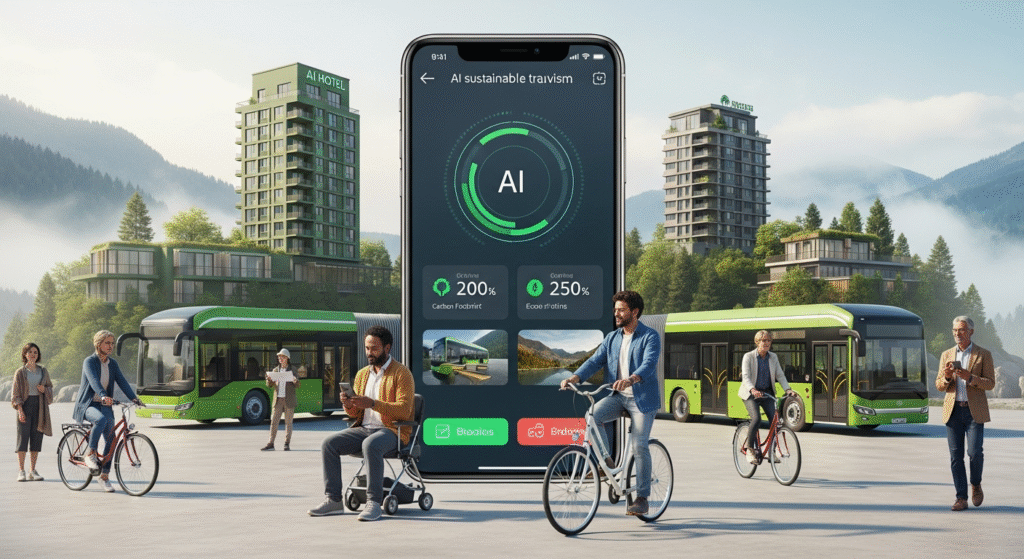
Eco-conscious travelers are able to make the most of the sustainability choices from trip planning until they arrive at their hotel, with the aid of AI platforms.
Challenges of AI in the Travel Industry
While AI travel planning may have numerous advantages, it does come with its fair share of hassles. However, privacy has become a crucial issue considering how much of information on peoples’ travel becomes personal while being gathered by AI systems.
While others do like to go by human travel advisors for emotionally emotional help and customized advice. However, there are some elements of the local scene that might not be captured by the AI recommendation, such as unique cultural experiences that can be offered by locals.
Automation is an important aspect of work, but not everything can be automated; companies in the tourism sector will need to rely on both automation and human interaction in order to maintain trust, authenticity.
Future of AI-Powered Tourism
The potential of AI in the tourism industry seems limitless and is expected to continue shaping the industry in the coming years. Travel platforms of the future could feature virtual reality ‘locals’ to show travelers what their future home would be like, knowingly selects trips for their clients, and boasts an AI travel companion.
Also expected are more airports and hotels with Smart technology. Facial recognition check-ins, AI-driven security and even a totally virtual customer service are some of the new features travelers can expect to encounter.
Conclusion
Personalized travel planning is poised to become one of the biggest tourism trends in 2026, and it’s all thanks to AI.Personalized travel planning is one of the biggest tourism trends of 2026, and it can all be attributed to the help of AI. Earlier travelers were content with their fare of boring travel experiences, but today they demand smarter and faster travel experiences as well as more personalized ones. In an ever-changing tourism landscape, technology has always been a major presence and is playing an ever growing role.
Travel companies readily adapt to these modifications to draw in contemporary travelers and boost customers’ enjoyment. In the near future, the tourism sector could become even more efficient, personalized and ”connected via digital route” with AI technology still improving.
Frequently Asked Questions (FAQs)
What is the journey in a travel plan powered by artificial intelligence?
Personalized travel planning is a feature offered by AI-powered travel apps that uses artificial intelligence to plan an itinerary, book hotels, compare flights and make personalized travel recommendations.
Why are technologies for travel in AI in trend for 2026?
The uptake of AI travel tech is a result of the demand for travelers who can seamlessly book their travels with less time, receive familiarised suggestions and in real-time travel help.
How can AI enhance travel experiences?
From creating personal itineraries to providing immediate assistance and visa application help, AI transforms travels by delivering personalized options, up-to-date information, on-the-go optimizations, and much more.
Is it safe to use AI travel apps?
The majority of AI travel apps have safety protocols, yet travelers ought to really check their protection strategies prior to giving individual data.
Can the Future of Travel Agency’s Function be Synced with AI?
While there are numerous travel aspects that may be streamlined using AI, significant numbers of travellers still favor to see a personal travel representative give their expert opinion that they can support them.